



Bridging the Gap Between Theory and Practice at #WIDA2026
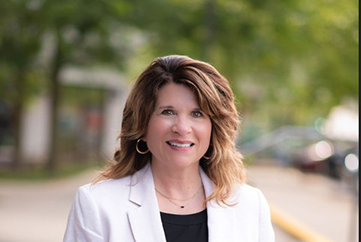
By: Hannah Haynes
The WIDA Annual Conference is all about educator-led sessions focused on real classrooms, real challenges and real solutions. In September 2026, educators from across the country will gather in St. Louis, Missouri, for powerful professional development, and Dr. Merica Clinkenbeard is one of more than 100 educators who will lead a session.
Merica is the director of the English Language Development Program for Springfield Public Schools in Springfield, Missouri, where the program serves more than 50 schools. Merica operates where systems, instruction and leadership intersect. Her daily work centers on a challenge many educators recognize: bridging the gap between what we know supports multilingual learners and the reality of the classroom experience.
Her session at #WIDA2026, “From Framework to Practice: Language-Rich Instruction for Multilingual Learners,” offers educators concrete ways to translate the WIDA English Language Development (ELD) Standards Framework from theory into meaningful, student-centered practice.
A Session That Moves Beyond Theory
While many educators are familiar with the WIDA ELD Standards Framework, Merica notes that there’s room for deeper understanding, and implementation is an entirely different challenge.
“It can feel complex, and for many teachers, especially content teachers, it does not always feel accessible or directly connected to what they do every day,” she says.
Her session zeros in on this gap, focusing not on abstract planning but on what the framework looks like live in classrooms:
- How students interact during instruction
- How students use language to think and communicate
- How teachers support language development in real time
“The framework itself does not change instruction,” Merica emphasizes. “What we do with it does.”
Rather than revisiting the WIDA ELD Standards Framework itself, Merica focuses on what happens next. Her session centers on making language visible in instruction, not as an added layer but as something embedded in every lesson. The shift she describes is subtle but powerful: from thinking language as “one more thing” to do, to recognizing it as the medium through which all learning happens.
Merica’s session stands out not only because of the clarity of the message but also because it is grounded in practice. She invites educators to reconsider what they are listening for and looking for in their classrooms. Who is doing the talking? How are students thinking? How are they using language?
“When we slow down and listen to students talk, we start to see what students can do with language and where they need support,” Merica says. “That is where instruction begins to shift. Not just based on what we planned but based on what students are showing us in the moment.”
What to Expect
This session is for classroom teachers, instructional coaches and administrators alike.
For teachers, it will provide practical ways to plan for and support student language use during lessons. For instructional coaches, it will offer an understanding of how to use student language as evidence and to guide more focused coaching conversations. For administrators, it will give tips for classroom observations that go beyond what the teacher is doing and focus on how students are using language to engage with content.
Whether attendees are designing lessons, supporting colleagues or observing instruction, Merica’s session offers a common way of thinking about language development that carries across roles and contexts.
“If participants leave with one takeaway, I hope it’s this: Language development does not happen in isolation,” Merica explains.
Why You Shouldn’t Miss It
For Merica, being selected to present at #WIDA2026 is an honor.
“I see it as a responsibility to share work that is grounded in real classrooms and meaningful for educators,” she says.
Her session is one of many that reflect the same mission and one that makes the WIDA Annual Conference truly unique: a shared trust that what you’re learning is rooted in real classrooms and ready to apply.
Participants in Merica’s session will walk away with a flexible tool that connects planning, instruction and observation but, most importantly, keeps the focus on students.
Register for #WIDA2026 today and join Merica for a session that will give you tangible takeaways and tools.
This session is just one of many educator-led sessions designed to elevate your teaching practices. Explore the full schedule on the WIDA Annual Conference website.

Connect with WIDA
Learn about the latest resources, exchange ideas and engage in discussion.


