


Resources/Recursos
Featured Resources

WIDA Webinar recording: Supporting Writing Growth for Multilingual Learners
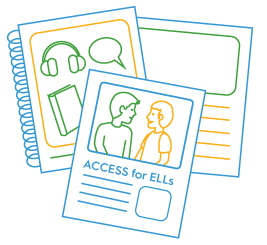
ACCESS Test Practice and Sample Items

Alternate ACCESS Sample Items
All resources/Todos los recursos
Filter resources by:
Resources/Recursos
Examining the Impact of COVID-19 on English Learners' Proficiency and EL Subgroup Disparities
This webinar examines ways in which large-scale assessment data can be used to extract important, practical and useful insights on average patterns and high-level trends in English learners’ education and academic outcomes.
Resource DetailsReleased May 2024
Can Do Philosophy
This document articulates the WIDA Can Do Philosophy, which expresses the foundational belief that every learner brings valuable contributions to everything they do.
Resource Details View Download NowReleased May 2024
Investigación-acción: Un catalizador para la enseñanza y el aprendizaje integral en contextos multilingües
Este resumen informativo de WIDA presenta la Investigación-acción — un concepto que resalta el trabajo mutuo entre investigadores y educadores para abordar los desafíos en el salón de clases — lo que alienta a los maestros a utilizar sus voces para hacer contribuciones significativas al campo, ya sea a través de esfuerzos colaborativos o independientes.
Resource DetailsReleased May 2024
WIDA ELD Standards Framework Implementation: What, When and How?
This webinar offers guidance on using the implementation guide for the WIDA English Language Development Standards Framework, 2020 Edition.
Resource DetailsReleased January 2024
WIDA MODEL and the CEFR
WIDA conducted a research study that linked WIDA MODEL Online scale scores to the Common European Framework of Reference (CEFR). This video discusses the research study, the findings, and the Understanding WIDA MODEL Online Scale Scores in Terms of CEFR Levels tool.
Resource DetailsReleased January 2024
Building on Students’ Cultural and Linguistic Assets
Many literacy programs were not designed to effectively use multilingual students’ knowledge, skills, and strengths. This Snapshot is the first in a five-part series that provides insights from relevant research and suggests ways to engage the significant strengths that multilingual learners bring to their literacy development.
Resource DetailsReleased January 2024
Developing Oral Language Comprehension
Many literacy programs were not designed to effectively use multilingual students’ knowledge, skills, and strengths. This Snapshot is the second in a five-part series that provides insights from relevant research and suggests ways to engage the significant strengths that multilingual learners bring to their literacy development.
Resource DetailsReleased January 2024
Developing Reading Comprehension and Academic Literacies
Many literacy programs were not designed to effectively use multilingual students’ knowledge, skills, and strengths. This Snapshot is the fourth in a five-part series that provides insights from relevant research and suggests ways to engage the significant strengths that multilingual learners bring to their literacy development.
Resource DetailsReleased January 2024
Expanding and Strengthening Vocabulary and Word Knowledge
Many literacy programs were not designed to effectively use multilingual students’ knowledge, skills, and strengths. This Snapshot is the third in a five-part series that provides insights from relevant research and suggests ways to engage the significant strengths that multilingual learners bring to their literacy development.
Resource DetailsReleased January 2024
Fostering Equitable Literacy Learning
Many literacy programs were not designed to effectively use multilingual students’ knowledge, skills, and strengths. This Snapshot is the fifth in a five-part series that provides insights from relevant research and suggests ways to engage the significant strengths that multilingual learners bring to their literacy development.
Resource DetailsReleased January 2024
Understanding WIDA MODEL Online Scale Scores in Terms of CEFR Levels
WIDA research findings show that WIDA MODEL Online scale scores can be interpreted in terms of Common European Framework of Reference for Languages (CEFR) levels. Use the tables in this document to look up students' MODEL scale scores and see the corresponding CEFR levels for each domain.
Resource Details View Download NowReleased December 2023
Desarrollando el español: Guiding bilingual instructional planning with Marco DALE
This webinar dives into the components of the Marco de los estándares del desarrollo auténtico del lenguaje español de WIDA (Marco DALE) and explores how they can support educator's planning processes.
Resource DetailsReleased November 2023
WIDA Proficiency Level Descriptors: Informing Expectations and Scaffolding
This Snapshot will give K-12 educators ideas on how to apply the Proficiency Level Descriptors as they consider scaffolding practices that support multilingual students in meeting grade level content learning goals.
Resource DetailsReleased November 2023
What Is WIDA Alternate ACCESS? (multiple languages)
This handout, available in multiple languages, is a resource that educators can send home with students to give families an introduction to WIDA Alternate ACCESS. The handout explains what WIDA Alternate ACCESS is and why students take this kind of assessment.
Resource DetailsReleased October 2023
Using Embedded Universal Tools to Support Students' Test-taking Experience
This WIDA Focus Bulletin explores educators’ and students’ perceptions of the accessibility tools available to all students when taking an online WIDA assessment. The bulletin emphasizes the ways in which the universal tools can support the test-taking experience for multilingual learners.
Published October 2023
Authors: Jason A. Kemp, Ahyoung Alicia Kim
Released October 2023
WIDA All Year Long
Learn how WIDA is more than a test! Mr. Vega is a 6th grade EAL (English as an Additional Language) teacher at an international school who works with colleagues and families to support multilingual learners. Follow Mr. Vega all year long, as he focuses on what his students can do, using WIDA resources to collaborate and plan effective learning activities throughout the school year.
Resource Details View Download NowReleased September 2023
Alternate Proficiency Level Descriptors
The Alternate Proficiency Level Descriptors (Alternate PLDs) are an extension of the PLDs found in the WIDA English Language Development (ELD) Standards, 2020 Edition, and describe the continuum of language development for ELs with the most significant cognitive disabilities. The Alternate PLDs are organized into five levels of English language proficiency for two communication modes: interpretive and expressive. Refer to the Glossary and Text Examples section for definitions of terms and examples of student responses. WIDA, with the help of classroom educators, created these proficiency levels to be unique to WIDA Alternate ACCESS.
Resource Details View Download NowReleased August 2023
Rating Multilingual Learners' Written Language Consistently
This Focus Bulletin explores the process of evaluating student writing, and examines how educators can consistently evaluate the written language of multilingual learners. It provides strategies for educators to support evaluations that generate focused and helpful feedback for students.
Resource Details View Download NowReleased June 2023
WIDA Guiding Principles of Early Language Development
The WIDA Guiding Principles of Early Language Development provide practitioners with a broad perspective on key concepts related to the language development of young children learning multiple languages. To further clarify the guiding principles, these research highlights provide practitioners with research-based descriptions and examples of effective practices.
Resource Details View Download NowReleased June 2023
WIDA PreK-3 Essential Actions
This guide provides a set of actions PreK-3 educators, administrators and staff can take to support a language-focused approach to family and community engagement, and teaching and learning practices.
Resource Details View Download NowReleased June 2023